إعـــــــلان

تقليص
لا يوجد إعلان حتى الآن.

سلسلة الكائنات الاسطورية في الكتاب المقدس

تقليص
X
 
  • تصفية - فلترة
  • الوقت
  • عرض
إلغاء تحديد الكل
مشاركات جديدة

  • سلسلة الكائنات الاسطورية في الكتاب المقدس

    بسم الله الرحمن الرحيم

    مقدمة:

    الحمد لله كثيرا جل جلاله و عز مقامه وحده المتصرف في الكون لا اله غيره و الصلاة و السلام على من لا نبي بعده و على اله وصحبه وسلم

    اضع لكم باذن الله سلسلة خاصة تكشف بعض المعتقدات الوثنية الخرافية التي تسلسلت الى الكتاب المقدس و التي تختص بذكر بعض الكائنات الاسطورية التي كان يؤمن بها الشعوب الوثنية زمن بني اسرائيل

    و هي سلسلة الهدف منها كشف حقيقة الكتاب المقدس و هل هو فعلا من الله و هل فعلا لم يتعرض للتحريف ؟

    فكلام الله عز وجل حق و لا يمكن لله عز وجل ان يذكر ما ليس بصحيح او ما هو غير كائن او غير موجود

    و لذا فان اي كتاب ينسب الى الله عز وجل ويحتوي على ما ذكرناه فانه لا يخرج من احد امرين :

    اولهما : ان يكون الكتاب كله ملفق و لا تصح نسبته الى الله عز وجل

    ثانيهما : ان يكون الكتاب اصله صحيح و لكن دخل فيه من التحريف ما دخل حتى صار حقه ممزوجا بباطل وباطله ممزوجا بحق

    و هذه السلسلة هي دعوة للنصراني للتامل و التفكر في كتابه و في حقيقة ما يؤمن به و هل يمكن لله عز وجل ان يذكر وجود كائنات خرافية لا وجود لها الا في الاساطير الوثنية !!!؟؟؟

    نبدا بحول الله و قوته السلسلة و على الله توكلنا

    يتبع

  • #2
    الجزء الاول : الغول او معز الوحش

    بسم الله الرحمن الرحيم

    نقرا في اشعياء 13:
    20 لاَ تُعْمَرُ إِلَى الأَبَدِ، وَلاَ تُسْكَنُ إِلَى دَوْرٍ فَدَوْرٍ، وَلاَ يُخَيِّمُ هُنَاكَ أَعْرَابِيٌّ، وَلاَ يُرْبِضُ هُنَاكَ رُعَاةٌ،
    21 بَلْ تَرْبُضُ هُنَاكَ وُحُوشُ الْقَفْرِ، وَيَمْلأُ الْبُومُ بُيُوتَهُمْ، وَتَسْكُنُ هُنَاكَ بَنَاتُ النَّعَامِ، وَتَرْقُصُ هُنَاكَ مَعْزُ الْوَحْشِ،

    معز الوحش المذكور هنا هو كائن اسطوري ذو شعر كثيف نصفه السفلي شكل معز و نصفه العلوي انسان او ما يشابه ذلك و قد اختلف وصفه كثيرا الا ان الاتفاق على كثرة شعره و شبهه بالمعز بل وقد شبه بالغول !!!

    و الدليل :

    1. تراجم الكتاب المقدس :

    نقرا ما يقاربه من ترجمة الحياة السارة لنص اشعياء 34: 14 :14تـتلاقى الوحوشُ وبناتُ آوى ويتَنادَى مَعَزُ الوحشِ إليها. هُناكَ تستَقِرُّ الغُولُ‌ وتجِدُ لنَفسِها مَقاما.

    نقرا من ترجمة الملك جيمس لنص اشعياء 13: 21
    But wild beasts of the desert shall lie there; and their houses shall be full of doleful creatures; and owls shall dwell there, and satyrs shall dance there.


    2. نقرا من تفاسير شراح الكتاب المقدس :

    1. تفسير القديس جيروم و الذي قال بان الكلمة العبرية تعني مخلوق نصفه الاول بشري و نصفه الاخر كالمعز !!!
    نقرا من كتاب Commentary on the prophecies of Isaiah v.1. Alexander, Joseph A. (Joseph Addison
    الصفحة 283


    https://babel.hathitrust.org/cgi/pt?...ew=1up;seq=303


    2. نقرا من JOHN JILL'S EXPOSITION OF THE BIBLE
    and satyrs shall dance there;
    a sort of monstrous creatures with the ancients, painted half men and half goats; the upper part of them like men, except the horns on their heads, and the lower parts like goats, and all over hairy; and the word here used signifies hairy; and is used for goats, and sometimes for devils, either because they have appeared in this form, as Kimchi says, to them that believe them; or because they, by their appearance, inject such horror in men, as cause their hair to stand upright: hence the Targum, Jarchi, and Kimchi, interpret it of devils here; and so the Septuagint version, and those that follow it, the Syriac and Arabic, render it, "and demons shall dance there": with this agrees the account of mystical Babylon, ( Revelation 18:2 )
    https://www.biblestudytools.com/comm...iah-13-21.html


    3. نقرا من COMMENTARY CRITICAL AND EXPLANATORY ON THE WHOLE BIBLE
    satyrs--sylvan demi-gods--half man, half goat--believed by the Arabs to haunt these ruins; probably animals of the goat-ape species [VITRINGA]. Devil-worshippers, who dance amid the ruins on a certain night [J. WOLFF].
    https://www.biblestudytools.com/comm...isaiah-13.html


    4. نقرا من BARNE'S NOTES ON THE WHOLE BIBLE
    And satyrs shall dance there - (שׂערים s'e‛ı̂rı̂ym ). A “satyr,” in mythology, was a sylvan deity or demigod, represented as a monster, half man and half goat, having horns on his head, a hairy body, with the feet and tail of a goat (Webster). The word used here properly denotes that which is “hairy,” or “rough,” and is applied to “goats” in Genesis 25:25; Psalm 68:21; Leviticus 13:10, Leviticus 13:25-26, Leviticus 13:30, Leviticus 13:32. It is often rendered “hair.” (“see” Taylor). In Isaiah 34:14, it is rendered ‹satyr;‘ in Deuteronomy 32:2, it is rendered ‹the small ram;‘ in Leviticus 17:7, and 2 Chronicles 11:15, it is rendered ‹the devils,‘ meaning objects of worship, or idols. Bochart supposes that it refers to the idols that were worshipped among the Egyptians, who placed “goats” among their gods. Doderlin supposes that it means either “fawns,” or a species of the monkey tribe, resembling in their rough and shaggy appearance the wild goat.
    https://www.studylight.org/commentar...isaiah-13.html


    4. نقرا من JOHN TRAPP COMPLETE COMMENTARY
    And satyrs.] Or, Devils in borrowed shapes and hideous apparitions.
    https://www.studylight.org/commentar...isaiah-13.html


    5. نقرا من WESLEY'S EXPLANATORY NOTES
    Satyrs — The learned agree, that these are frightful and solitary creatures
    https://www.studylight.org/commentaries/wen/isaiah-13.html


    6. نقرا من WHEDON'S COMMNETARY ON THE BIBLE

    Satyrs — Literally, shaggy creatures; perhaps a species of goat, though Tristram (Natural History of the Bible, page 132,) thinks the “goat-god” of Egypt, with which the children of Israel became acquainted in Egypt, furnished the popular myth of the satyr — half goat and half man — and poetically the prophet Isaiah painted horrible desert places with this ideal creature. Nevertheless, he countenances another interpretation of the word, namely, a creature of the dog-faced baboon, also an object of worship with the Egyptians, as shown from their monuments, like to the mocko, or maccacus Arabacus, a baboon which is now disseminated from Central Africa as far north as to the continence of the Tigris and the Euphrates.
    It is observable that our Lord, in Matthew 12:43, recognised the sentiment, current even in his day, that the desert is the abode of demons or unclean spirits. Virgil also calls them saltantes satyros, dancing satyrs. The Yezides of Syria and Mesopotamia are a sect of devil worshippers.
    Joseph Wolf, missionary, and traveller to Bokhara, saw pilgrims of this sect upon the ruins of Babylon performing strange and horrid rites by moonlight, dancing and howling, and reminding him of this passage. (Delitzsch.)
    https://www.studylight.org/commentar...isaiah-13.html


    3. تاكيد المعاجم على ان المعنى العبري للكلمة المستخدمة שָׂעִיר هي SATYR

    1. نقرا من معجم Brown-Driver-Briggs:
    שָׂעִיר noun masculine satyr, demon (with he-goat's form, or feet; Late Hebrew id.; compare BaudStud. i. 136 ff.; hairy demons WeSkizzen iii. 135; Heid. 152 RSSemitic 113, 423: 2nd ed. 120, 441); absolute ׳שׂ Isaiah 34:14 inhabiting desolate ruins, so plural שְׂעִירִים Isaiah 13:21; name for idols 2Chronicles 11:15 and (שְׂעִירִם) Leviticus 17:7 (H); probably also ׳בָּמוֺת הַשּׂ 2 Kings 23:8 (ᵑ0 הַשְּׁעָרִים) HoffmZAW ii (1882), 175 SS Kmp Klo Kit Benz Bur.
    https://biblehub.com/hebrew/8163.htm

    2. نقرا من معجم سميث
    Satyr [N] [E]
    (satyr or satyr ), a sylvan deity or demigod of Greek mythology, represented as a monster, part man and part goat. ( Isaiah 13:21 ; 34:14 ) The Hebrew word signifies "hairy" or "rough," and is frequently applied to "he-goats." In the passages cited it probably refers to demons of woods and desert places. Comp. ( Leviticus 17:7 ; 2 Chronicles 11:15 )
    https://www.biblestudytools.com/dict...ary/satyr.html


    ملاحظة :
    النقطة الثالثة هذه (الاستشهاد بالمعاجم ) وضعتها ردا على تاويل بعض مفسريهم و الذين حاولوا ان يؤولوا النص هنا على انه تعبير عن القرود او الاوعال التي تعيش في الجبال كما فعل تادرس مالطي في تفسيره اذ ان معنى الكلمة و سياق النص لا يحتمل هذا التاويل الذي وضعوه للتهرب من الحقيقة .

    هذا وصلى الله على سيدنا محمد و على اله وصحبه وسلم

    يتبع
    التعديل الأخير تم بواسطة محمد سني 1989; الساعة 30-01-2019, 23:58.

    تعليق


    • #3


      المشاركة الأصلية بواسطة محمد سني 1989 مشاهدة المشاركة
      3. تاكيد المعاجم على ان المعنى العبري للكلمة المستخدمة שָׂעִיר هي SATYR


      1. نقرا من معجم Brown-Driver-Briggs:
      שָׂעִיר noun masculine
      satyr,
      demon (with he-goat's form, or feet; Late Hebrew id.; compare BaudStud. i. 136 ff.; hairy demons WeSkizzen iii. 135; Heid. 152 RSSemitic 113, 423: 2nd ed. 120, 441); absolute ׳שׂ
      Isaiah 34:14 inhabiting desolate ruins,
      so plural שְׂעִירִים Isaiah 13:21; name for idols 2Chronicles 11:15 and (שְׂעִירִם) Leviticus 17:7 (H); probably also ׳בָּמוֺת הַשּׂ 2 Kings 23:8 (ᵑ0 הַשְּׁעָרִים) HoffmZAW ii (1882), 175 SS Kmp Klo Kit Benz Bur.
      https://biblehub.com/hebrew/8163.htm

      2. نقرا من معجم سميث

      Satyr [N] [E]
      (satyr or satyr ),
      a sylvan deity or demigod of Greek mythology, represented as a monster, part man and part goat.
      ( Isaiah 13:21 ; 34:14 )
      The Hebrew word signifies "hairy" or "rough," and is frequently applied to "he-goats." In the passages cited it probably refers to demons of woods and desert places. Comp. ( Leviticus 17:7 ; 2 Chronicles 11:15 )
      https://www.biblestudytools.com/dict...ary/satyr.html


      ملاحظة :

      النقطة الثالثة هذه (الاستشهاد بالمعاجم ) وضعتها ردا على تاويل بعض مفسريهم و الذين حاولوا ان يؤولوا النص هنا على انه تعبير عن القرود او الاوعال التي تعيش في الجبال كما فعل تادرس مالطي في تفسيره اذ ان معنى الكلمة و سياق النص لا يحتمل هذا التاويل الذي وضعوه للتهرب من الحقيقة
      .
      جزيت خيراً أستاذنا الغالي ،
      المفسّر اليهودي راشي يفضح كذب و تدليس و دجل تلاميذ بولُس الكَذَبة :


      كلمة שָׂעִיר ( ساعير ) و الجمع שְּׂעִירִם ( سعريم ) وردت أيضاً بذات المعنى (SATYRS) في نص لاويين أصحاح17 عدد 7 وقد أشار الحِبر اليهودي راشي إلى ذلك في تفسيره و قَرَنَهُ بنص أشعياء 13 : 21 موضوع دراسة وبحث أستاذنا الغالي محمد سني :

      ז וְלֹא-יִזְבְּחוּ עוֹד, אֶת-זִבְחֵיהֶם, לַשְּׂעִירִם, אֲשֶׁר הֵם זֹנִים אַחֲרֵיהֶם: חֻקַּת עוֹלָם תִּהְיֶה-זֹּאת לָהֶם, לְדֹרֹתָם.


      الملفات المرفقة
      التعديل الأخير تم بواسطة *اسلامي عزي*; الساعة 31-01-2019, 01:14.


      أنقر(ي) فضلاً أدناه :


      سُبحان الذي يـُطعـِمُ ولا يُطعَم ،
      منّ علينا وهدانا ، و أعطانا و آوانا ،
      وكلّ بلاء حسن أبلانا ،
      الحمدُ لله حمداً حمداً ،
      الحمدُ لله حمداً يعدلُ حمدَ الملائكة المُسبّحين ، و الأنبياء و المُرسلين ،
      الحمدُ لله حمدًا كثيراً طيّبا مُطيّبا مُباركاً فيه ، كما يُحبّ ربّنا و يرضى ،
      اللهمّ لكَ الحمدُ في أرضك ، ولك الحمدُ فوق سماواتك ،
      لكَ الحمدُ حتّى ترضى ، ولكَ الحمدُ إذا رضيتَ ، ولكَ الحمدُ بعد الرضى ،
      اللهمّ لك الحمدُ حمداً كثيراً يملأ السماوات العلى ، يملأ الأرض و مابينهما ،
      تباركتَ ربّنا وتعالَيتَ .


      تعليق


      • #4
        المشاركة الأصلية بواسطة محمد سني 1989 مشاهدة المشاركة
        الجزء الاول : الغول او معز الوحش
        بسم الله الرحمن الرحيم
        نقرا في اشعياء 13:
        20 لاَ تُعْمَرُ إِلَى الأَبَدِ، وَلاَ تُسْكَنُ إِلَى دَوْرٍ فَدَوْرٍ، وَلاَ يُخَيِّمُ هُنَاكَ أَعْرَابِيٌّ، وَلاَ يُرْبِضُ هُنَاكَ رُعَاةٌ،
        21 بَلْ تَرْبُضُ هُنَاكَ وُحُوشُ الْقَفْرِ، وَيَمْلأُ الْبُومُ بُيُوتَهُمْ، وَتَسْكُنُ هُنَاكَ بَنَاتُ النَّعَامِ، وَتَرْقُصُ هُنَاكَ مَعْزُ الْوَحْشِ،
        معز الوحش المذكور هنا هو كائن اسطوري ذو شعر كثيف نصفه السفلي شكل معز و نصفه العلوي انسان او ما يشابه ذلك و قد اختلف وصفه كثيرا الا ان الاتفاق على كثرة شعره و شبهه بالمعز بل وقد شبه بالغول !!!


        علاقة بنصّ اشعياء 13 : 21 موضوع البحث والدراسة :

        ترجمة Wycliffe Bibleاستعملت للدلالة على هذا المخلوق الخُرافي عبارة hairy beasts (الوحوش كثيفة الشَّعر)

        But wild beasts shall rest there, and the houses of them shall be filled with dragons; and ostriches shall dwell there (and owls shall nest there), and hairy beasts shall skip there


        ترجمة International Standard Version استعملت عبارة المعز- الشياطين :

        But desert beasts will lie down there, and their houses will be full of howlincreatures;thereowls
        willdwell, and goat demons will dance there


        أنقر(ي) فضلاً أدناه :


        سُبحان الذي يـُطعـِمُ ولا يُطعَم ،
        منّ علينا وهدانا ، و أعطانا و آوانا ،
        وكلّ بلاء حسن أبلانا ،
        الحمدُ لله حمداً حمداً ،
        الحمدُ لله حمداً يعدلُ حمدَ الملائكة المُسبّحين ، و الأنبياء و المُرسلين ،
        الحمدُ لله حمدًا كثيراً طيّبا مُطيّبا مُباركاً فيه ، كما يُحبّ ربّنا و يرضى ،
        اللهمّ لكَ الحمدُ في أرضك ، ولك الحمدُ فوق سماواتك ،
        لكَ الحمدُ حتّى ترضى ، ولكَ الحمدُ إذا رضيتَ ، ولكَ الحمدُ بعد الرضى ،
        اللهمّ لك الحمدُ حمداً كثيراً يملأ السماوات العلى ، يملأ الأرض و مابينهما ،
        تباركتَ ربّنا وتعالَيتَ .


        تعليق


        • #5
          بارك الله فيكما اساتذتنا الاعزاء
          الخ محمد سني والاخ اسلامي عزي علي المواضيع الرائعة

          تعليق


          • #6
            الجزء الثاني : ليليث او الغولة !!!

            بسم الله الرحمن الرحيم

            نقرا في اشعياء 34 ترجمة الفاندايك :
            14 وَتُلاَقِي وُحُوشُ الْقَفْرِ بَنَاتِ آوَى، وَمَعْزُ الْوَحْشِ يَدْعُو صَاحِبَهُ. هُنَاكَ يَسْتَقِرُّ اللَّيْلُ وَيَجِدُ لِنَفْسِهِ مَحَّلًا.

            كلمة الليل هنا تحريف و تدليس وقد اختلف المترجمون

            فنجد ان بعض الترجمات قد رقعت المعنى و ذكرت ان المراد به هي البومة الليلية !!!

            نقرا من ترجمة الملك جيمس
            The wild beasts of the desert shall also meet with the wild beasts of the island, and the satyr shall cry to his fellow; the screech owl also shall rest there, and find for herself a place of rest.

            بينما نجد تراجم اخرى كانت اشد جراة و ذكرت المعنى الصحيح او ما يقرب منه

            ترجمة الحياة السارة:
            14تـتلاقى الوحوشُ وبناتُ آوى ويتَنادَى مَعَزُ الوحشِ إليها. هُناكَ تستَقِرُّ الغُولُ‌ وتجِدُ لنَفسِها مَقاما.


            و نقرا ايضا من ترجمة International Standard Version
            And desert creatures will meet with hyenas, and goat-demons will call out to each other. There also Liliths will settle, and find for themselves a resting place.


            و هذا الاخير هو الترجمة الصحيحة كما سنبين

            و ليليث هي كائنة اسطورية خرافية كانت شعوب بلاد ما بين النهرين تؤمن انها مخلوقة تاتي في الليل للرجال لتغويهم و تقتل الاطفال الصغار و قد تنامت هذه الاسطورة بين شعوب بلاد ما بين النهرين و شعوب منطقة الهلال الخصيب بشكل كبير الى ان مكانها في طيات اسفار الكتاب المقدس !!!

            و للتاكيد على ان النص يتكلم عن هذه المخلوقة و ليس عن اي شيء اخر فاننا ندعم مقولتنا بالدلائل الاتية :

            1. استعمال النص العبري للكلمة التي لا تدل الا على هذه المخلوقة الاسطورية .

            النص العبري لاشعياء 34: 14
            וּפָגְשׁוּ צִיִּים אֶת־אִיִּים וְשָׂעִיר עַל־רֵעֵהוּ יִקְרָא אַךְ־שָׁם הִרְגִּיעָה לִּילִית וּמָצְאָה לָהּ מָנֹֽוחַ

            الكلمة المستخدمة هنا :לִילִית

            نقرا من معجم Brown-Driver-Briggs
            לִילִית noun feminine Lilith (Milton Che night-hag), name of a female night-demon haunting desolate Edom; probably borrowed from Babylonian, Isaiah 34:14 (Late Hebrew id.; Assyrian lilîtu, DlHWB 377; Syriac PS1951; on the development of legends of Lilith in later Judaism, see BuxLex. Talmud., under the word Cheon the passage GrünbaumZMG xxxi.1877, 250 f. — Connexion with לילה perhaps only apparent, a popular etymology).
            https://biblehub.com/hebrew/3917.htm


            و نقرا من معجم Gesenius' Hebrew-Chaldee Lexicon


            https://www.blueletterbible.org/lang...gs=H3917&t=DBY

            ملاحظة :
            حاول صاحب المعجم الاخير ان يتهرب من الحقيقة فقد فسر معناها اللغوي اولا بانها تعني ليليث الكائنة الليلية الاسطورية الغامضة الا انه انكر ان يكون هذا هو المعنى في سياق الكتاب المقدس و السبب ... لان الكتاب المقدس كلام الله و لا يصح ان يكون فيه مثل هذه الكائنات الاسطورية !!!!
            لاحظوا كيف جعل اعتقاده اساس انكاره للمعنى الواضح خاصة بعد ان فسرها كذلك في البداية !!!!


            2. اقرار شراح الكتاب المقدس على المعنى الذي ذكرناه .

            نقرا من JOHN JILL'S EXPOSITION OF THE BIBLE
            the screech owl also shall rest there, and find for herself a place
            of rest;
            there being no inhabitants to disturb her. By the name "Lilith", it appears to be a night bird, which flies and is heard in the night. The Jews call a she demon by this name, which, they say {s}, has a human face, and has wings, and destroys children as soon as born; and therefore the Jews, especially in Germany, write upon the four corners of the bed of a new mother, Adam, Eve, out Lilith F20; the same with the Lamia of the Romans; and so the Vulgate Latin here renders it.
            https://www.biblestudytools.com/comm...iah-34-14.html


            نقرا من COMMENTARY CRITICAL AND EXPLANATORY ON THE WHOLE BIBLE
            14. wild beasts of the desert . . . island--rather, "wild cats . . . jackals" ( Isaiah 13:21 ).
            screech owl--rather, "the night specter"; in Jewish superstition a female, elegantly dressed, that carried off children by night. The text does not assert the existence of such objects of superstition, but describes the place as one which superstition would people with such beings.

            https://www.biblestudytools.com/comm...isaiah-34.html


            و نقرا من Ellicott's Commentary for English Readers (يصفها انها مصاصة دماء !!!!!)
            (14) The wild beasts of the desert . . .--Better, wild cats or hyenas shall meet wolves. The nouns that follow belong, apparently, to the region of mythical zoology. The English "satyr" expresses fairly enough the idea of a "demon-brute" haunting the waste places of the palaces of Edom, while the "screech-owl" is the Lilith, the she-vampire, who appears in the legends of the Talmud as having been Adam's first wife, who left him and was turned into a demon. With the later Jews, Lilith, as sucking the blood of children, was the bugbear of the nursery. Night-vampire would, perhaps, be the best rendering.

            https://biblehub.com/isaiah/34-14.htm


            و نقرا من Pulpit Commentary
            Verse 14. - Wild beasts of the desert... wild beasts of the island. In the original, tsiyim and 'iyim - "wailers" and "howlers" - probably jackals and wolves, or wolves and hyenas." The satyr (see the comment on Isaiah 13:21). The screech owl The word here used, lilith, occurs only in this place. It may be doubted whether any bird, or other animal, is meant. Lilit was the name of a female demon, or wicked fairy, in whom the Assyrians believed - a being thought to vex and persecute her victims in their sleep. The word is probably a derivative from leilah, night, and designates" the spirit of the night" - a mischievous being, who took advantage of the darkness to play fantastic tricks. A Jewish legend made Lilith the first wife of Adam, and said that, having pronounced the Divine Name as a charm, she was changed into a devil. It was her special delight to murder young children (Buxtorf, 'Lex. Rabbin.,' ad roe.). The prophets, when they employ poetic imagery, are not tied down to fact, but are free to use the beliefs of their contemporaries in order to heighten the force of their descriptions.
            https://biblehub.com/isaiah/34-14.htm


            نقرا من BARNE'S NOTES
            The screech-owl - Margin, 'Night-monster.' The word לילית lı̂ylı̂yt (from ליל layil, night) properly denotes a night-spectre - a creature of Jewish superstition. The rabbis describe it in the form of a female elegantly dressed that lay in wait for children at night - either to carry them off, or to murder them. The Greeks had a similar idea respecting the female ἔμπουτα empouta, and this idea corresponds to the Roman fables respecting the Lamice, and Striges, and to the Arabic notions of the Ghules, whom they described as female monsters that dwell in deserts, and tear men to pieces (see Gesenius, Com. in loc; and Bochart, Hieroz. ii. 831). The margin in our version expresses the correct idea. All this is descriptive of utter and perpetual desolation - of a land that should be full of old ruins, and inhabited by the animals that usually make such ruins their abode.
            https://biblehub.com/commentaries/isaiah/34-14.htm


            3. اعتراف الموسوعة اليهودية و التلمود و المدراش (نقلا من الموسوعة اليهودية) :
            نقرا من الموسوعة اليهودية :
            Female demon. Of the three Assyrian demons Lilu, Lilit, and Ardat Lilit, the second is referred to in Isa. xxxiv. 14. Schrader ("Jahrb. für Protestantische Theologie," i. 128)takes Lilith to be a goddess of the night; she is said to have been worshiped by the Jewish exiles in Babylon (Levy, in "Z. D. M. G." ix. 470, 484). Sayce ("Hibbert Lectures," pp. 145 et seq.), Fossey ("La Magie Assyrienne," pp. 37 et seq.), and others think that "Lilith" is not connected with the Hebrew "layil" (night), but that it is the name of a demon of the storm, and this view is supported by the cuneiform inscriptions quoted by them. It must, however, be assumed that the resemblance to the Semitic "layil" materially changed the conception of Lilith among the Semites, and especially among the Jews. No definite conclusions can be drawn from the passage in Isaiah, where it is said of the devastated palaces of Edom that wild animals shall dwell in them "and the satyr shall cry to his fellow; the screech-owl also shall rest there, and find for herself a place of rest" (Isa. xxxiv. 14; see Cheyne's note ad loc.). Baudissin connects Lilith with Zech. v. 9.
            ......In Talmud and Midrash.
            Lilith is more fully described in post-Biblical literature, where she appears as a demon of the night, as suggested by her Hebrew name. Three classes of demons are mentioned: spirits, devils, and "lilin" (Targ. Yer. to Deut. xxxii. 24; Targ. Sheni to Esth. i. 3; passim). The first have neither body nor form; the second appear in complete human shape; the third in human shape, but with wings (Rashi to Sanh. 109a). Adam procreated all the spirits while he was under a spell (Gen. R. xx. 11; 'Er. 18b). Similarly, Eve bore demons to male spirits for the space of 130 years. This corresponds to the view that the demons are half human (Ḥag. 16a). Hence an abortion which has the shape of Lilith may be a child, though it has wings (Nid. 24b). Lilith is a seductive woman with long hair ('Er. 100b); she is the Queen of Zemargad (Targ. Job i. 15; comp. Bacher and Kohut [see bibliography]); Ahriman is her son (B. B. 73a). She goes about at night, fastening herself upon any one sleeping alone in a room (Shab. 151b). "The Lord will protect thee" (Num. vi. 24) means, according to Targ. Yer., ". . . from lilin." The meteor-stone is her arrow and is a remedy against disease (Giṭ. 69b). Kohut's assumption that Agrat bat Maḥlat ("daughter of the dancer"), who roams at night with myriads of demons (Pes. 112b, bottom), is the queen of the lilin, is not verified. King Solomon, who commanded all spirits, had the lilin dance before him (Targ. Sheni Esth. i. 3).
            https://www.jewishencyclopedia.com/articles/9986-lilith


            4. التفاسير اليهودية (تفسير راشي كمثال واحد فقط ):
            نقرا من تفسير راشي لنص اشعياء 34 : 14
            .lilith: The name of a female demon.
            https://www.chabad.org/library/bible...showrashi=true


            فنجد اذا مما سبق ان ليليث المذكورة في النص هي كائنة اسطورية موجودة في عقائد البابليين و الاشوريين و قد تاثر اليهود بمثل هذه الخرافات زمن السبي فادخلوها في اسفار الكتاب المقدس !!!! فمنهم من جعلها نصف انسان و الباقي شيطان و منهم من اضاف لها اجنحة و منهم من جعلها مصاصة دماء ليلية تقتل الاطفال الصغار و تغوي الرجال و منهم من جعلوها زوجة ادم عليه الصلاة و السلام الاولى !!!!


            هذا وصلى الله على سيدنا محمد و على اله وصحبه وسلم

            يتبع
            التعديل الأخير تم بواسطة محمد سني 1989; الساعة 31-01-2019, 20:37.

            تعليق


            • #7
              للتوثيق :

              الغول SATYR


              ليليث الغولة / مصاصة الدماء


              الصورتان منقولتان من كتاب الدكتور سامي عامري (هل اقتبس القران من كتب اليهود و النصارى)

              يتبع

              تعليق


              • #8
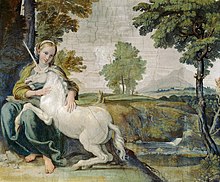
                الجزء الثالث : الحصان ذو القرن الواحد

                بسم الله الرحمن الرحيم

                نقرا من سفر العدد 23
                22 اَللهُ أَخْرَجَهُ مِنْ مِصْرَ. لَهُ مِثْلُ سُرْعَةِ الرِّئْمِ.

                الرئم هنا بالعبرية هي רְאֵם وهي كلمة في العبرية لها عدة معاني كالثور او البقر او وحيد القرن او حتى الحصان ذو القرن الواحد UNICORN

                نقرا من Brown-Driver-Briggs
                רְאֵם noun masculineJob 39:10 wild ox (Assyrian rêmu DlHWB 603 (ראם), HoughtonTSBA v (1877). 336 ff., and illustrated before p. 33 SchrKGF 135 ff., 530 HomNS 237 ff., 410, 436 f. DrDeuteronomy 33:17; on strength and ferocity, PlinNH viii. 21; Aramaic רְאֵמָא, רֵימָא, רֵימָנָא (LagBN 58); Arabic is white antelope, antilope leucoryx; ᵐ5 (erroneous) μονοκέρως (Isaiah 34:7 ἅδροι, ᵑ9 unicornis, and (oftener) rhinoceros); — absolute ׳ר Numbers 23:22 +, רְאֵים Psalm 92:11, רֵים Job 39:9,10; plural רְאֵמִים Isaiah 34:7; Psalm 29:6, רֵמִים Psalm 22:22 (see Baer);
                https://biblehub.com/hebrew/7214.htm


                و نقرا من معجم سترونج
                רְאֵם rᵉʼêm, reh-ame'; or רְאֵים rᵉʼêymlemma רְאיֵם second vowel, corrected to רְאֵים; or רֵים rêym; or רֵם rêm; from H7213; a wild bull (from its conspicuousness):—unicorn.
                https://www.blueletterbible.org/lang...gs=H7214&t=KJV


                و مع ان الكلمة بالعبرية تحمل عدة معاني الا ان الترجمة السبعينية و تراجم اخرى ترجمت اللفظ العبري الى UNICORN / الحصان ذو القرن

                و سنستعرض اهم هذه الترجمات :

                1. الترجمة السبعينية :

                النص في الترجمة السبعينية :
                θεὸς ὁ ἐξαγαγὼν αὐτοὺς ἐξ Αἰγύπτου ὡς δόξα μονοκέρωτος αὐτῷ
                https://www.blueletterbible.org/kjv/.../t_conc_140022

                اللفظ μονοκέρως و الذي ينطق MONOKEROS و الذي يعني وحيد قرن (ليس الحيوان الذي نعرفه اليوم بوحيد القرن) و هي اشارة واضحة الى الحصان ذي القرن الواحد

                نقرا من كتابSacred Monsters: Mysterious and Mythical Creatures of Scripture, Talmud الصفحة 44 للمؤلف Nosson Slifkin


                https://books.google.com.sa/books?id...epage&q=sacred monsters natan slifkin&f=false


                2. ترجمات الكتاب المقدس (وقد اعتمدت هذه الترجمات على الترجمة السبعينية) :
                King James Bible
                God brought them out of Egypt; he hath as it were the strength of an unicorn.


                Jubilee Bible 2000
                God brought them out of Egypt; he has, as it were the strength of a unicorn.


                American King James Version
                God brought them out of Egypt; he has as it were the strength of an unicorn


                Brenton Septuagint Translation
                It was God who brought him out of Egypt; he has as it were the glory of a unicorn.


                Webster's Bible Translation
                God brought them out of Egypt; he hath as it were the strength of a unicorn.


                3. ترجمة سعديا الفيومي الحبر اليهودي الذي كتب اول ترجمة عربية للعهد القديم و استخدم في هذا النص لفظ كركدن للدلالة على الحصان ذي القرن الواحد

                نقرا من Sacred Monsters: Mysterious and Mythical Creatures of Scripture, Talmud الصفحة 45 للمؤلف Nosson Slifkin


                https://books.google.com.sa/books?id...lifkin&f=false


                ملاحظة اخيرة :
                حاول بعض شراح الكتاب المقدس ان يؤولوا معنى UNICORN و الحقيقة المرة هي ان تاويلهم مبني على خرافية اللفظ الحرفي الذي اشارت اليه الترجمة السبعينية فاساس تاويلهم باطل
                نقرا من WESLLEY'S EXPLANATORY NOTES
                An unicorn - The word may mean either a rhinoceros, or a strong and fierce kind of wild goat. But such a creature as an unicorn, as commonly painted, has no existence in nature.
                https://www.biblestudytools.com/commentaries/wesleys-explanatory-notes/numbers/numbers-23.html


                الحصان ذو القرن الواحد / UNICORN

                اضغط على الصورة لعرض أكبر. 

الإسم:	Screen Shot 2019-02-01 at 1.18.39 AM.png 
مشاهدات:	1 
الحجم:	463.0 كيلوبايت 
الهوية:	781126

                المصدر : الكتاب المذكور في الاعلى الصفحة 44


                هذا و صلى الله على سيدنا محمد و على اله وصحبه وسلم

                يتبع
                التعديل الأخير تم بواسطة محمد سني 1989; الساعة 01-02-2019, 01:23.

                تعليق


                • #9
                  الحصان ذو القرن الواحد / UNICORN


                  يتبع

                  تعليق


                  • #10


                    الدّرج / الكتاب / المخطوط الطّائر !!!!؟؟؟؟

                    مخلوق خُرافي آخر جادت به قريحة مؤلّف / مؤلّفي الهولي بايبل !


                    زكريا 5 : 1


                    فَعُدْتُ وَرَفَعْتُ عَيْنَيَّ وَنَظَرْتُ وَإِذَابِدَرْجٍ طَائِرٍ.


                    نقرأ من تفسير أنطونيوس فكري :

                    هذه هي الرؤيا السادسة الدرج الطائر= الدرج أي الكتاب المخطوط.
                    التعديل الأخير تم بواسطة *اسلامي عزي*; الساعة 04-02-2019, 22:27.


                    أنقر(ي) فضلاً أدناه :


                    سُبحان الذي يـُطعـِمُ ولا يُطعَم ،
                    منّ علينا وهدانا ، و أعطانا و آوانا ،
                    وكلّ بلاء حسن أبلانا ،
                    الحمدُ لله حمداً حمداً ،
                    الحمدُ لله حمداً يعدلُ حمدَ الملائكة المُسبّحين ، و الأنبياء و المُرسلين ،
                    الحمدُ لله حمدًا كثيراً طيّبا مُطيّبا مُباركاً فيه ، كما يُحبّ ربّنا و يرضى ،
                    اللهمّ لكَ الحمدُ في أرضك ، ولك الحمدُ فوق سماواتك ،
                    لكَ الحمدُ حتّى ترضى ، ولكَ الحمدُ إذا رضيتَ ، ولكَ الحمدُ بعد الرضى ،
                    اللهمّ لك الحمدُ حمداً كثيراً يملأ السماوات العلى ، يملأ الأرض و مابينهما ،
                    تباركتَ ربّنا وتعالَيتَ .


                    تعليق


                    • #11
                      الجزء الرابع : لويثان التنين البحري !!

                      بسم الله الرحمن الرحيم

                      نقرا من سفر اشعياء 27: 1
                      فِي ذلِكَ الْيَوْمِ يُعَاقِبُ الرَّبُّ بِسَيْفِهِ الْقَاسِي الْعَظِيمِ الشَّدِيدِ لَوِيَاثَانَ، الْحَيَّةَ الْهَارِبَةَ. لَوِيَاثَانَ الْحَيَّةَ الْمُتَحَوِّيَةَ، وَيَقْتُلُ التِّنِّينَ الَّذِي فِي الْبَحْرِ

                      النص باللفظ العبري :
                      בַּיֹּום הַהוּא יִפְקֹד יְהוָה בְּחַרְבֹו הַקָּשָׁה וְהַגְּדֹולָה וְהַֽחֲזָקָה עַל לִוְיָתָן נָחָשׁ בָּרִחַ וְעַל לִוְיָתָן נָחָשׁ עֲקַלָּתֹון וְהָרַג אֶת־הַתַּנִּין אֲשֶׁר בַּיָּֽם׃ ס

                      https://www.blueletterbible.org/kjv/.../t_conc_706001

                      الكلمة لويثان هنا هي לִוְיָתָן

                      و هذه الكلمة هي اشارة الى مخلوق بحري اسطوري ضخم يشبه الحية !!!!

                      و الدليل :

                      1. تصريح المعاجم اللغوية :

                      نقرا من معجم Gesenius' Hebrew-Chaldee Lexicon

                      A very large aquatic creature


                      https://www.blueletterbible.org/lang...gs=H3882&t=KJV


                      نقرا من معجم سترونج
                      לִוְיָתָן livyâthân, liv-yaw-thawn'; from H3867; a wreathed animal, i.e. a serpent (especially the crocodile or some other large sea-monster); figuratively, the constellation of the dragon; also as a symbol of Babylon:—leviathan, mourning.
                      https://www.blueletterbible.org/lang...gs=H3882&t=KJV


                      2. نقرا من تفاسير الكتاب المقدس
                      :

                      نقرا من تفسير Cambridge Bible for Schools and CollegesThe word leviathan means twisted or having folds, and is an epithet for a serpent. In Isaiah 27:1 we read: In that day Jehovah with his sore and great and strong sword shall visit leviathan the fleeing serpent, and leviathan the serpent with coils. The key to the meaning of the verse, however, is found in Job 26:13, which rightly rendered means,


                      By His breath the heavens become bright,


                      His hand pierceth the fleeing serpent.


                      Here piercing the fleeing serpent and making the heavens clear are parallel acts. The fleeing serpent, therefore, was the cause of the darkness. In both passages in Job there is an allusion to the popular mythology, according to which the darkening or eclipse of the sun and moon was caused by the serpent throwing its folds around them, or swallowing them up. In its origin this mythology is probably nothing more than a stroke of the poetic imagination, which turned the dark cloud or eclipsing shadow into a huge Dragon. Enchanters were supposed to have power to set this Dragon in motion, and cause the lights of day or night to be swallowed up.
                      https://biblehub.com/commentaries/job/3-8.htm


                      و نقرا من BARNE'S NOTES
                      The margin is, as in the Hebrew, "a leviathan." The word rendered "ready" עתידים ‛âthı̂ydı̂ym, means properly ready, prepared; and then practiced or skillful. This is the idea here, that they were practiced or skillful in calling up the "leviathan;" see Schultens "in loc." The word rendered in the text "mourning," and in the margin "leviathan" לויתן lı̂vyâthân, in all other parts of the sacred Scriptures denotes an animal; see it explained in the notes at Isaiah 27:1, and more fully in the notes at Job 41:It usually denotes the crocodile, or some huge sea monster
                      https://biblehub.com/commentaries/job/3-8.htm


                      و نقرا من Jamieson-Fausset-Brown Bible Commentary
                      8. them … curse the day—If "mourning" be the right rendering in the latter clause of this verse, these words refer to the hired mourners of the dead (Jer 9:17). But the Hebrew for "mourning" elsewhere always denotes an animal, whether it be the crocodile or some huge serpent (Isa 27:1), such as is meant by "leviathan."
                      https://biblehub.com/commentaries/job/3-8.htm


                      3. مصادر اكاديمية :

                      نقرا من كتاب God's conflict with the dragon and the sea لجون داي الفصل الرابع الصفحة 142 ما يؤكد لنا ان النص ماخوذ من اساطير و نصوص اوغاريتية خاصة بعبادة الاله الوثني بعل !!!:

                      saiah 27:1
                      On that day the Lord with his hard and great and strong sword will punish Leviathan the twisting
                      serpent, Leviathan the crooked serpent, and he will slay the dragon that is in the sea.
                      As has frequently been pointed out, these words from the proto-apocalyptic work in Is. 24-7
                      bear a very strong resemblance to those in the Ugaritic Baal myth, where Mot addresses Baal
                      as follows: ktmhs. Itn. btn. brh. tkly. btn. `qltn ‘Because you smote Leviathan the twisting serpent
                      (and) made an end of the crooked serpent...’ (CTA 5.I.1-2 = KTU 1.5.I.1-2). Again, in CTA
                      3.IIID.37-9 (= KTU 13.III.40-42), Leviathan the crooked serpent is spoken of as a dragon as in
                      Is. 27:1, l’istbm. tnn. ‘istm[ ]mhst. btn `qltn slyt. d. sb`t. r’asm ‘Surely I lifted up the dragon, I...
                      (and) smote the crooked serpent, the tyrant with the seven heads.’ The close similarity is all the
                      more remarkable both in view of the time-scale involved and because the word `
                      a
                      qallaton
                      ‘crooked’ which is here paralleled in Ugaritic is found nowhere else in the Old Testament
                      (though the plural of the verb `ql [Hab. 1:4] and the adjective `qalqal [Judg, 5:6, Ps. 125:5] are
                      so attested, and cf. Rahab which appears as nahas bariah ‘twisting serpent’ in Job 26:13). The
                      striking parallelism between the relatively late text in Is. 27:1 and the Ugaritic texts almost a
                      millennium earlier is a reminder that the closeness of the language of Old Testament texts to
                      that of the Ugaritic texts is not necessarily an indication of an early date for the Old Testament
                      passages in question. Quite often the parallels are in relatively late texts.
                      The Ugaritic texts cited above make it clear that Is. 27:1 is describing one monster, not three, as
                      has sometimes been supposed. What is referred to in Is. 27:1 parallels the event referred to in
                      Is. 24:21, ‘On that day the Lord will punish the host of heaven, in heaven, and the kings of the
                      earth, on the earth.’ The reference to ‘the host of heaven’ in this parallel verse has sometimes
                      been thought to indicate that the monster references in Is. 27:1 allude to three constellations,
                      Serpens, Draco and Hydra.2
                      However, whereas Is. 24:21 refers to the kings of the earth as a
                      whole
                      143
                      together with their angelic princes, it is probable that the reference to the defeat of Leviathan in
                      Is. 27:1 alludes to the downfall of one particular hated power of the time, in view of the use of
                      the sea monster imagery to refer to particular hostile nations elsewhere in the Old Testament

                      https://jbburnett.com/resources/day_e...ict-dragon.pdf


                      نقرا من الموسوعة اليهودية كيف ان الاعتقاد بهذا المخلوق الاسطوري تاثر بالاصل بالاساطير البابلية !!! ثم نقرا وصفا لهذا لشكل هذا المخلوق الاسطوري الضخم !!:
                      The Biblical description contains mythical elements,
                      and the conclusion is justified that these monsters were not real, though the hippopotamus may have furnished in the main the data for the description. Only of a unique being, and not of a common hippopotamus, could the words of Job xl. 19 have been used: "He is the first [A. V. "chief"] of the ways of God [comp. Prov. viii. 22]; he that made him maketh sport with him" (as the Septuagint reads, πεποιημένον ἐγκαταπαιζέσΘαι; A. V. "He that made him can make his sword to approach unto him"; comp. Ps. civ. 26); or "The mountains bring him forth food; where all the beasts of the field do play" (Job xl. 20). Obviously behemoth is represented as the primeval beast, the king of all the animals of the dry land, while leviathan is the king of all those of the water, both alike unconquerable by man (ib. xl. 14, xli. 17-26). Gunkel ("Schöpfung und Chaos," p. 62) suggests that behemoth and leviathan were the two primeval monsters corresponding to Tiamat (= "the abyss"; comp. Hebr. "tehom") and Kingu (= Aramaic "'akna" = serpent") of Babylonian mythology.
                      ......


                      —In Rabbinical Literature:
                      According to a midrash, the leviathan was created on the fifth day (Yalḳ., Gen. 12). Originally God produced a male and a female leviathan, but lest in multiplying the species should destroy the world, He slew the female, reserving her flesh for the banquet that will be given to the righteous on the advent of the Messiah (B. B. 74a). The enormous size of the leviathan is thus illustrated by R. Johanan, from whom proceeded nearly all the haggadot concerning this monster: "Once we went in a ship and saw a fish which put his head out of the water. He had horns upon which was written: 'I am one of the meanest creatures that inhabit the sea. I am three hundred miles in length, and enter this day into the jaws of the leviathan'" (B. B. l.c.). When the leviathan is hungry, reports R. Dimi in the name of R. Johanan, he sends forth from his mouth a heat so great as to make all the waters of the deep boil, and if he would put his head into paradise no living creature could endure the odor of him (ib.). His abode is the Mediterranean Sea; and the waters of the Jordan fall into his mouth (Bek. 55b; B. B. l.c.).
                      https://www.jewishencyclopedia.com/ar...n-and-behemoth


                      هذا وصلى الله على سيدنا محمد و على اله وصحبه وسلم
                      التعديل الأخير تم بواسطة محمد سني 1989; الساعة 06-02-2019, 19:34.

                      تعليق


                      • #12
                        الجزء الخامس : بهموث

                        بسم الله الرحمن الرحيم


                        نقرا في سفر ايوب 40
                        15 «هُوَذَا بَهِيمُوثُ الَّذِي صَنَعْتُهُ مَعَكَ يَأْكُلُ الْعُشْبَ مِثْلَ الْبَقَرِ.


                        بهموث هو كائن اسطوري خيالي كان يؤمن به اليهود و يظن انه اقتبسوه من عقائد الامم المجاورة كالبابليين مثلا

                        و الدليل:

                        نقرا من الموسوعة اليهودية :


                        Ever since Bochart ("Hierozoicon," iii. 705), "behemoth" has been taken to denote the hippopotamus; and Jablonski, to make it correspond exactly with that animal, compared an Egyptian form, "p-ehe-mu" (= "water-ox"), which, however, does not exist. The Biblical description contains mythical elements, and the conclusion is justified that these monsters were not real, though the hippopotamus may have furnished in the main the data for the description. Only of a unique being, and not of a common hippopotamus, could the words of Job xl. 19 have been used: "He is the first [A. V. "chief"] of the ways of God [comp. Prov. viii. 22]; he that made him maketh sport with him" (as the Septuagint reads, πεποιημένον ἐγκαταπαιζέσΘαι; A. V. "He that made him can make his sword to approach unto him"; comp. Ps. civ. 26); or "The mountains bring him forth food; where all the beasts of the field do play" (Job xl. 20). Obviously behemoth is represented as the primeval beast, the king of all the animals of the dry land, while leviathan is the king of all those of the water, both alike unconquerable by man (ib. xl. 14, xli. 17-26). Gunkel ("Schöpfung und Chaos," p. 62) suggests that behemoth and leviathan were the two primeval monsters corresponding to Tiamat (= "the abyss"; comp. Hebr. "tehom") and Kingu (= Aramaic "'akna" = serpent") of Babylonian mythology.
                        https://www.jewishencyclopedia.com/ar...n-and-behemoth


                        و نقرا من GENEVA STUDY BIBLE
                        (e) This beast is thought to be the elephant, or some other, which is unknown.
                        (f) Whom I made as well as you.
                        (g) This commends the providence of God toward man: for if he were given to devour as a lion, nothing would be able to resist him, or content him.
                        https://www.biblestudytools.com/comm...ob/job-40.html


                        و نقرا من قاموس الكتاب المقدس :
                        ويصدق قول أيوب على هذا الحيوان أكثر مما يصدق على سواه، لأنه عظيم الحجم ضخم الجسم طوله نحو 16 قدمًا وعلوه 7 أقدام. وأما علماء اليهود فيزعمون أن بهيموث حيوان كبير الحجم ذو قدرة عظيمة ومنظره هائل، ومن شأنه أنه كان ولا يزال يسمّن منذ ابتداء الخليقة إلى مجيء المسيح ، فإذا جاء قدّم عندها وليمة للمؤمنين.
                        https://translate.google.com/transla...38.html&anno=2

                        و يؤيد هذا ما قاله الحبر راشي في تفسيره :
                        behemoth: Prepared for the future.
                        https://www.chabad.org/library/bible...showrashi=true


                        و يؤيده ايضا ما نقرؤه في Barne's Notes
                        They are chiefly taken from the collection of opinions made by Schultens, in loc. Among them are the following:
                        (1) That wild animals in general are denoted. This appears to have been the opinion of the translators of the Septuagint.
                        (2) Some of the rabbis supposed that a huge monster was referred to, that ate every day "the grass of a thousand mountains."
                        https://biblehub.com/commentaries/job/40-15.htm


                        وقد حاول البعض ترقيع الموضوع فزعموا انه فرس النهر او انه الفيل الا ان هذا مردود باقوال بعض شراح الكتاب المقدس :

                        1. انكر ادم كلارك ان يكون تفسير بهيموث هو الفيل او فرس النهر و رد ذلك بحجة ان اوصاف المخلوق في الكتاب المقدس لا تطابق تلك التي في الطبيعة

                        نقرا من تفسير ادم كلارك :
                        These, having been carefully considered and deeply investigated both by critics and naturalists, have led to the conclusion that either the elephant, or the hippopotamus or river-horse, is the animal in question; and on comparing the characteristics between these two, the balance is considerably in favor of the hippopotamus. But even here there are still some difficulties, as there are some parts of the description which do not well suit even the hippopotamus; and therefore I have my doubts whether either of ....
                        the animals above is that in question, or whether any animal now in existence be that described by the Almighty
                        .
                        .... As I do not believe that either the elephant or the river-horse is intended here, I shall not take up the reader's time with any detailed description.
                        https://www.sacred-texts.com/bib/cmt/clarke/job040.htm

                        و لكن بعد كل هذا الانكار يعتقد ادم كلارك ان بهيموث هو وصف لحيوان الماموث المنقرض و من حججه في ذلك انه يظن ان هذا الحيوان كان ياكل اللحم !!!!!!!!!
                        ثم يلخص ان هذا الحيوان لا بد انه في زمن ايوب عليه الصلاة و السلام كان لا يزال موجودا و لم ينقرض بعد !!!!!!!!!!!

                        يقول :
                        The mammoth, for size, will answer the description in this place, especially Job 40:19 : He is the chief of the ways of God. That to which the part of a skeleton belonged which I examined, must have been, by computation, not less than twenty-five feet high, and sixty feet in length! The bones of one toe I measured, and found them three feet in length! One of the very smallest grinders of an animal of this extinct species, full of processes on the surface more than an inch in depth, which shows that the animal had lived on flesh
                        .....God seems to have made it as the proof of his power; and had it been prolific, and not become extinct, it would have depopulated the earth. Creatures of this kind must have been living in the days of Job; the behemoth is referred to here, as if perfectly and commonly known.
                        https://www.sacred-texts.com/bib/cmt/clarke/job040.htm

                        لا تعليق !!!!


                        2. انكرت الموسوعة اليهودية هذا القول و ذكرت انه لا يستند على شيء
                        نقرا من الموسوعة اليهودية :
                        Some commentators find also in Isa. xxx. 6 ("bahamot negeb" = "beasts of the south") a reference to the hippopotamus; others again, in Ps. lxxiii. 22 ("I am as behemoth [="beasts"; A. V. "a beast"] before thee"); but neither interpretation has a substantial foundation. It is likely that the leviathan and the behemoth were originally referred to in Hab. ii. 15: "the destruction of the behemoth [A. V. "beasts"] shall make them afraid" (comp. LXX., "thee" instead of "them").
                        https://www.jewishencyclopedia.com/ar...n-and-behemoth


                        بهيموث


                        هذا وصلى الله على سيدنا محمد و على اله وصحبه وسلم

                        تعليق


                        • #13
                          الجزء السادس : الثعبان السام الطائر !!!

                          بسم الله الرحمن الرحيم

                          نقرا في اشعياء 14:
                          29.لاَ تَفْرَحِي يَا جَمِيعَ فِلِسْطِينَ، لأَنَّ الْقَضِيبَ الضَّارِبَكِ انْكَسَرَ، فَإِنَّهُ مِنْ أَصْلِ الْحَيَّةِ يَخْرُجُ أُفْعُوانٌ، وَثَمَرَتُهُ تَكُونُ ثُعْبَانًا مُسِمًّا طَيَّارًا.

                          نقرا في اشعياء 30 :
                          6 وَحْيٌ مِنْ جِهَةِ بَهَائِمِ الْجَنُوبِ: فِي أَرْضِ شِدَّةٍ وَضِيقَةٍ، مِنْهَا اللَّبْوَةُ وَالأَسَدُ، الأَفْعَى وَالثُّعْبَانُ السَّامُّ الطَّيَّارُ، يَحْمِلُونَ عَلَى أَكْتَافِ الْحَمِيرِ ثَرْوَتَهُمْ، وَعَلَى أَسْنِمَةِ الْجِمَالِ كُنُوزَهُمْ، إِلَى شَعْبٍ لاَ يَنْفَعُ

                          الثعبان السام الطيار هو كما يبدو اسمه كائن اسطوري و هو ثعبان سام له جناحان يطير بهما !!! ويطلق عليه احيانا التنين الطائر !!!

                          و الدليل :

                          1. من المعاجم اللغوية :

                          نقرا من معجم Gesenius' Hebrew-Chaldee Lexicon :
                          A FLYING DRAGON !!!

                          https://www.blueletterbible.org/lang...gs=H8314&t=KJV

                          نقرا من معجم Brown-Driver-Briggs
                          I. [שָׂרָף] noun masculineIsaiah 6:2 plural שְׂרָפִים seraphim (probably akin to I. ׳שׂ, as beings originally mythically conceived with serpents' bodies (serpent-deities, compare Isaiah 14:29; Isaiah 30:6), or (CheComm.) personified of lightning, compare arts. SERAPHIM, StrachanHast. DB CheEncy. Bib.; Di Marti and others compare also Egyptian guardian-griffins, called Šerref; see also כְּרוּב; on Assyrian Šarrapu (-bu), epithet of god Nergal, connected by DlWB with √ שָׂרַף, see שָׁרָב, ZimKAT 3. 415); — in OT. majestic beings with six wings, and human hands and voices, attendant upon ׳י Isaiah 6:2,6.
                          https://biblehub.com/hebrew/8314.htm


                          2. من مصادر اكاديمية :

                          نقرا من الموسوعة اليهودية :
                          The idea of flying serpents ("saraf me'ofef"; Isa. xiv. 29, xxx. 6) rests, perhaps, on the confusion of serpents with lizards, which is found also in classical writers. They belong to those fanciful creatures with which folk-lore peoples the desert regions ("Pal. Explor. Fund, Quarterly Statement," 1894, p. 30). For the "naḥash bariaḥ" and "naḥash 'akalaton" in Isa. xxvii. 1 see Leviathan.
                          https://www.jewishencyclopedia.com/ar.../13440-serpent

                          نقرا من كتاب اوتو كايسر ISAIAH : A COMMNETARY 13-39 الصفحة 54 :


                          https://books.google.com.sa/books?id... 13-39&f=false


                          3. مصادر يهودية :
                          نقرا في ترجوم يوناثان (و هي ترجمة ارامية لبعض اسفار العهد القديم ) لنص اشعياء 14: 29 :
                          Rejoice not, 0 Philistia, all of ye, because the government that hath made you servile is broken; because from the children of Jesse shall come forth the Messiah, and his works among you shall be as a flying serpent.
                          https://www.sefaria.org/Targum_Jonat...saiah&lang2=en

                          نقرا في تفسير راشي ايضا :
                          and his offspring is a fiery flying serpent: Jonathan renders: And his deeds against you will be like flying snakes.
                          https://www.chabad.org/library/bible...showrashi=true


                          ويؤكد هذا ادم كلارك في تفسيره :
                          The Targum renders the twenty-ninth verse in a singular way. "For, from the sons of Jesse shall come forth the Messiah; and his works among you shall be as the flying serpent."
                          https://www.sacred-texts.com/bib/cmt/clarke/isa014.htm


                          ملاحظة :
                          حاول بعض شراح الكتاب المقدس من النصارى تفسير النص بان اللفظ المراد هنا هو مجرد رمز و كناية لا اقل و لا اكثر الا ان بعضهم او احدهم اراد ان يتحفنا ب "حقيقة" علمية لم يكتشفها الاولون و لا الاخرون الا وهي انه يوجد فصيل من الثعابين يمتلك اجنحة !!!!!

                          نقرا من JOHN GILL'S EXPOSITION OF THE BIBLE
                          and his fruit [shall be] a fiery flying serpent;
                          not the fruit of the cockatrice, but of the serpent; and intends the same as before, Hezekiah, likened to such a creature, because of the fury and swiftness with which he was to come, and did come, against the Philistines, and the hurt he did to them: the "serpent" to which he is compared is called "fiery", or "burning", because it inflames where it bites; of which see ( Numbers 21:6 ) and "flying", not because it has wings, though some serpents are said to have them; but because, when it leaps or darts upon a man, it is with such swiftness, that it seems to fly; the serpent called "acontias", or "serpens jaculus", is here alluded to
                          https://www.biblestudytools.com/comm...iah-14-29.html

                          لا تعليق !!!!


                          الثعبان السام الطائر او التنين الطائر !!


                          هذا وصلى الله على سيدنا محمد و على اله وصحبه وسلم
                          التعديل الأخير تم بواسطة محمد سني 1989; الساعة 09-02-2019, 02:25.

                          تعليق


                          • #14
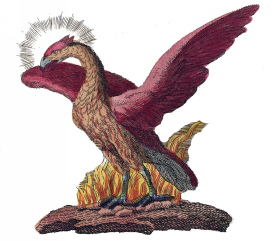
                            الجزء السابع : طائر السمندل / الفينيق !!!!

                            بسم الله الرحمن الرحيم

                            نقرا من سفر ايوب 29
                            18."فَقُلْتُ: إِنِّي فِي وَكْرِي أُسَلِّمُ الرُّوحَ، وَمِثْلَ السَّمَنْدَلِ أُكَثِّرُ أَيَّامًا"

                            السمندل هنا هو طائر الفينيق الخرافي و كان كتبة اليهود يؤمنون بوجوده و هو الذي كان العرب الجاهليون قبل الاسلام يسمونه على اغلب الظن العنقاء !!!

                            و الدليل :

                            اولا : من معاجم اللغة :
                            نقرا من معجم Brown-Driver-Briggs....חוֺל noun masculineHos 2:1 sand (perhaps as turning or whirling; otherwise explained by Sta, see below חֲוִילָה; Late Hebrew id., Aramaic
                            ....a. usually sand of seashore, simile of numberlessness, vastness, so of Abraham's seed Genesis 22:17 (J; compare Genesis 15:5); Jacob's Genesis 32:13 Genesis 41:49; of days of Job Job 29:18 (on interpretation = phoenix, see Di); of birds
                            https://biblehub.com/hebrew/2344.htm

                            نقرا من معجم Gesenius' Hebrew-Chaldee Lexicon
                            In this passage the hebrew interpreters understand the phoenix
                            https://www.blueletterbible.org/lang...gs=H2344&t=KJV


                            ثانيا : من شراح و تفاسير الكتاب المقدس و مصادر النصارى :

                            نقرا اقوى اعتراف لاحد اباء الكنيسة المعروفين وهو اكليمندس في كتاب الاباء الرسوليين الصفحة 34 :


                            file:///Users/MacbookPro/Downloads/coptic-books.blogspot.com الاباء الرسوليون.pdf


                            نقرا من قاموس الكتاب المقدس :
                            سمندل
                            يقال إنه طائر بالهند يأكل البيش (نبات مثل الزنجبيل رطبًا ويابسًا، وربما نبت فيه سم قاتل لكل حيوان أو طائر آخر) وإنه يستلذ بالنار ولا يحترق بها (طائر خرافي). والكلمة العبرية المترجمة "سمندل" هنا هي "حول"، وقد ترجمت في جميع المواضع الأخرى إلى "رمل" sand، وهكذا جاءت في الترجمة الكاثوليكية، كما تُرجمت "حبات الرمل" في كتاب الحياة.
                            وقد ذُكِر مرة واحدة في الكتاب المقدس على لسان الصديق أيوب : "فَقُلْتُ: إِنِّي فِي وَكْرِي أُسَلِّمُ الرُّوحَ، وَمِثْلَ السَّمَنْدَلِ أُكَثِّرُ أَيَّامًا" ( سفر أيوب 29 : 18 ).

                            https://translate.google.com/transla...01.html&anno=2


                            و نقرا من Commentary critical and explanatory on the whole bible

                            sand--( Genesis 22:17 , Habakkuk 1:9 ). But the Septuagint and Vulgate, and Jewish interpreters, favor the translation, "the phoenix bird." "Nest" in the parallel clause supports the reference to a bird. "Sand" for multitude, applies to men, rather than to years. The myth was, that the phoenix sprang from a nest of myrrh, made by his father before death, and that he then came from Arabia (Job's country) to Heliopolis (the city of the Sun) in Egypt, once in every five hundred years, and there burnt his father [HERODOTUS, 2:73]. Modern research has shown that this was the Egyptian mode of representing hieroglyphically a particular chronological era or cycle. The death and revival every five hundred years, and the reference to the sun, implies such a grand cycle commencing afresh from the same point in relation to the sun from which the previous one started. Job probably refers to this.
                            https://www.biblestudytools.com/comm...job-29-18.html


                            و نقرا من John Jill's exposition of the Bible
                            and I shall multiply [my] days as the sand;
                            which is not to be numbered; an hyperbolical expression, to denote the long life he expected to enjoy, and which was promised to good men; and which Job, notwithstanding his present despair of it, was favoured and satisfied with, ( Psalms 91:16 ) ( Job 42:16 Job 42:17 ) . Some versions render it, "as the phoenix" F14, a bird of that name, spoken of by many writers as a very long lived one; some say it lived five hundred years F15, others five hundred forty F16, others six hundred sixty F17; yea, some, and so the Jewish writers, as Jarchi and others F18, make it to live a thousand years, and some say F19 more; and it is reported of it, though not with sufficient evidence, that there is never but one of the kind at a time; which, perceiving its end drawing near, it makes a nest of cassia, frankincense, and other spices, and sets fire to it, and burns itself in it, and that out of its ashes comes forth an egg, which produces another; and some of the ancient writers, as Tertullian F20 particularly, have made use of this as an emblem of the resurrection; and to which some think Job has here respect; that he should live long like this bird, and then die and rise again; but inasmuch as this seems to be a fabulous bird, and that there is not, nor ever was, any such in being, it cannot well be thought that Job should allude unto it; though his making mention of his nest, in the former clause, may seem to favour it, and which has induced some to give into it
                            https://www.biblestudytools.com/comm...job-29-18.html


                            و نقرا من Cambridge Bible for Schools and Colleges
                            18. in my nest] i. e. surrounded by those belonging to him; he should die before them, not they before him, and in the midst of his possessions.


                            my days as the sand] Sand is the usual rendering of the word occurring here—an image of countless number. Most modern writers translate as the Phœnix, in accordance with Jewish tradition. The Sept. renders as the branch of the palm (φοίνικος). The Heb. word however can hardly have been translated palm, a meaning which does not belong to it, and the present Sept. text may have arisen from a misunderstanding of its original reading, like the Phœnix. The word “nest” in the first clause favours this translation. This bird was fabled to live 500 years, and to consume himself and his nest with fire, only to arise anew to life out of the ashes. Hence the name became a proverb, expressing the highest duration of life, φοίνικος ἔτη βιοῦν, to live as long as the Phœnix. The fable being current in Egypt the author of the Book might readily become acquainted with it.

                            https://biblehub.com/commentaries/job/29-18.htm


                            و نقرا من Barne's Notes
                            And I shall multiply my days as the sand - Herder renders this, "the Phoenix;" and observes that the Phoenix is obviously intended here, only through a double sense of the word, the figure of the bird is immediately changed for that of the palm-tree. The rabbis generally understand by the word here rendered "sand" (חול chôl) the Phoenix - a fabulous bird, much celebrated in ancient times. Osaia in the book "Bereshith Rabba," or Commentary on Genesis, says of this bird, "that all animals obeyed the woman (in eating the forbidden fruit) except one bird only by the name of חול chûl, concerning which it is said in Job, 'I will multiply my days as the כחול kechûl.'" Jannai adds to this, that "this bird lives a thousand years, and in the end of the thousand years, a fire goes forth from its nest, and burns it up, but there remains, as it were, an egg, from which again the members grow, and it rises to life:" compare Nonnus in Dionys. Lib. 40. Martial, Claudian, and others in Bochart, Hieroz. P. ii. Lib. vi. c. v. pp. 818-825. But the more correct rendering is, doubtless, the common one, and it is usual in the Scriptures to denote a great, indefinite number, by the sand; Genesis 22:17; Judges 7:12; Habakkuk 1:9.
                            https://biblehub.com/commentaries/job/29-18.htm


                            و نقرا من Jamieson-Fausset-Brown Bible Commentary
                            sand—(Ge 22:17; Hab 1:9). But the Septuagint and Vulgate, and Jewish interpreters, favor the translation, "the phœnix bird." "Nest" in the parallel clause supports the reference to a bird. "Sand" for multitude, applies to men, rather than to years. The myth was, that the phœnix sprang from a nest of myrrh, made by his father before death, and that he then came from Arabia (Job's country) to Heliopolis (the city of the Sun) in Egypt, once in every five hundred years, and there burnt his father [Herodotus, 2:73]
                            https://biblehub.com/commentaries/job/29-18.htm


                            ثالثا : نقرا من تفاسير يهودية :

                            نقرا من تفسير الرابابي راشي :
                            and I will multiply days as the phoenix: Heb. וכחול. This is a bird named חול, phoenix, upon which the punishment of death was not decreed because it did not taste of the Tree of Knowledge, and at the end of one thousand years, it renews itself and returns to its youth.
                            https://www.chabad.org/library/bible...showrashi=true


                            رابعا : مصادر اخرى :

                            نقرا من كتاب The Legends of the Jews: From the Creation to Exodus: Notes for Volumes 1 and 2

                            اضغط على الصورة لعرض أكبر. 

الإسم:	Screen Shot 2019-02-12 at 7.04.53 PM.png 
مشاهدات:	1 
الحجم:	457.7 كيلوبايت 
الهوية:	781131

                            https://books.google.com.sa/books?id...opedia&f=false


                            هذا وصلى الله على سيدنا محمد و على اله وصحبه وسلم
                            التعديل الأخير تم بواسطة محمد سني 1989; الساعة 12-02-2019, 19:10.

                            تعليق


                            • #15
                              للتوثيق

                              طائر السمندل !!

                              [IMG]https://cdn-images-1.medium.com/max/1600/0*ef5ZW6yMR0pbZQ8I.[/IMG]


                              تعليق

                              يعمل...
                              X