آخـــر الـــمـــشـــاركــــات





-

معلومات عن حجم بذرة الخردل و اقصى احجام لشجيرات بعض اصنافها :
http://www.henriettesherbal.com/ecle...s/sinapis.html
اقتباس
Botanical Source.—Sinapis alba is an annual plant, with a thinly hirsute stem, 2 to 5 feet high. The leaves are smoothish, lyrately pinnate, irregularly dentate, rugged, and pale-green; the lower lobes oblong and deeper; the terminal larger. Flowers large, pale-yellow; petals ovate, with straight claws; sepals linear, green, equal at base, and spreading. The siliques or pods are spreading, hispid, torose at the place of the seeds, nerved, shorter than the compressed, ensiform beak, about 4-seeded. The seeds are globose, large, and pale (W.—L.).
كما ترى توصف بانها نباتات حوليه و المتخصص يعرف ان النباتات الحوليه لا يمكن ان تكون اشجار و لكنها على اقصى تقدير شجيرات اذا لم تكن اعشاب و ايضا يوضح انها لا يتعدى طولها 2: 5 قدم اى 61: 152.5 سنتيمتر اى لا تتعدى متر و نص
اقتباس
Sinapis nigra is also an annual plant, with a round, smooth, striate, branching stem, 3 to 6 feet high. The lower leaves are large, lyrate, rough, variously lobed, and dentate; the upper linear-lanceolate, smooth, entire, and pendulous; all petiolate. Flowers small, sulphur-yellow; calyx spreading; petals obovate. Pods very numerous, nearly an inch long, bluntly quadrangular, nearly even and smooth, appressed close to the rachis of the raceme, tipped by a small, short, 4-sided style, but wholly destitute of the ensiform beak of the above species. The seeds are numerous, small, globose, blackish-brown, and veined (L.—W.).
و هذا صنف اخر ايضا يصنف من النباتات الحوليه و يجب ان اشير الى ان النباتات الحوليه معناها انها تستمر سنه واحده او موسم واحد ثم تموت و يجدد زراعتها مره اخرى فى الموسم القادم و لا اعرف كيف لنبات حولى صغير يكون مأوى لطيور السماء كما يقول الكتاب .
اقتباس
De******ion.—These plants are indigenous to Europe, and have been introduced into this country, where they are cultivated for use, and are found growing in old fields and waste places, flowering in June and July. The U. .S. P. describes White mustard-seed as "about 2 Mm. (1/12 inch) in diameter, almost globular, with a circular hilum; testa yellowish, finely pitted, hard; embryo oily, with a curved radical, and 2 cotyledons, one folded over the other; free from starch; inodorous; taste pungent and acrid"—(U. S. P.). Black mustard-seed is "about 1 Mm. (1/25 inch) in diameter, almost globular, with a circular hilum; testa blackish-brown or grayish-brown, finely pitted, hard; embryo oily, with a curved radical, and 2 cotyledons, one folded over the other; free from starch; inodorous when dry, but when triturated with water, of a pungent, penetrating, irritating odor; taste pungent and acrid"—(U. S. P.). Both kinds of mustard-seeds are employed in medicine, in the form of flour, and the white seed is likewise used entire. Table mustard is prepared from the white seed, but the finest quality is prepared with the purest flour of both the white and black, in nearly equal quantities. Wheat flour is sometimes added to diminish the pungency, and turmeric has been added to improve the color. (AJP1871) The medicinal flour of mustard should be made with the black and white seeds only, without any adulteration.
و هنا يوضح ان حجم البذور 1 مليمتر او 2 مليمتر
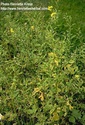
صوره لهذا النوع من الخردل :
http://www.henriettesherbal.com/pict...napis-alba.htm
http://www.henriettesherbal.com/pict...pis-alba-1.htm
يمكنك تغير التوقيع الإفتراضي من لوحة التحكم
معلومات الموضوع
الأعضاء الذين يشاهدون هذا الموضوع
الذين يشاهدون الموضوع الآن: 1 (0 من الأعضاء و 1 زائر)
المواضيع المتشابهه
-
بواسطة عمرو بن العاص في المنتدى حقائق حول الكتاب المقدس
مشاركات: 8
آخر مشاركة: 01-05-2013, 06:59 AM
-
بواسطة heshamzn في المنتدى الإعجاز العلمي فى القرأن الكريم والسنة النبوية
مشاركات: 2
آخر مشاركة: 28-08-2012, 10:05 PM
-
بواسطة kholio5 في المنتدى حقائق حول الكتاب المقدس
مشاركات: 79
آخر مشاركة: 09-06-2012, 12:25 AM
-
بواسطة الحاتمي في المنتدى منتدى الكتب
مشاركات: 1
آخر مشاركة: 25-11-2006, 01:57 PM
-
بواسطة عمرو بن العاص في المنتدى حقائق حول الكتاب المقدس
مشاركات: 6
آخر مشاركة: 02-09-2005, 03:21 PM
الكلمات الدلالية لهذا الموضوع
 ضوابط المشاركة
- لا تستطيع إضافة مواضيع جديدة
- لا تستطيع الرد على المواضيع
- لا تستطيع إرفاق ملفات
- لا تستطيع تعديل مشاركاتك
-
قوانين المنتدى





 رد مع اقتباس
المفضلات